
Reducing Waste Through Smarter Processes
IMPACT STORY | PROCESS & PLANET
Environmental progress can be as simple as evaluating a process and asking, “Can we do this differently?”
Teams across Worthington Enterprises are answering that question through practical improvements designed to reduce waste, conserve resources and keep materials in use longer. From rethinking wastewater treatment to finding new uses for manufacturing byproducts, employees are identifying opportunities to improve environmental performance while supporting efficient operations.
In our Columbus, Ohio, facility where refrigerant, foam and adhesive and helium cylinders are manufactured, liquid paint is used to finish products. Excess paint that was once solidified and sent to a landfill is now sent offsite for energy recovery where it can be incinerated and used as an alternative fuel source. The facility also uses water for pressure testing products as part of its quality testing procedure. The three pressure testing systems combined use more than 1,600 gallons of water. By storing and recirculating, the water is reused and only requires replacing twice each year. Finally, expanding recycling efforts across the facility is providing another opportunity to make it easier for employees to recycle while reducing disposal costs.
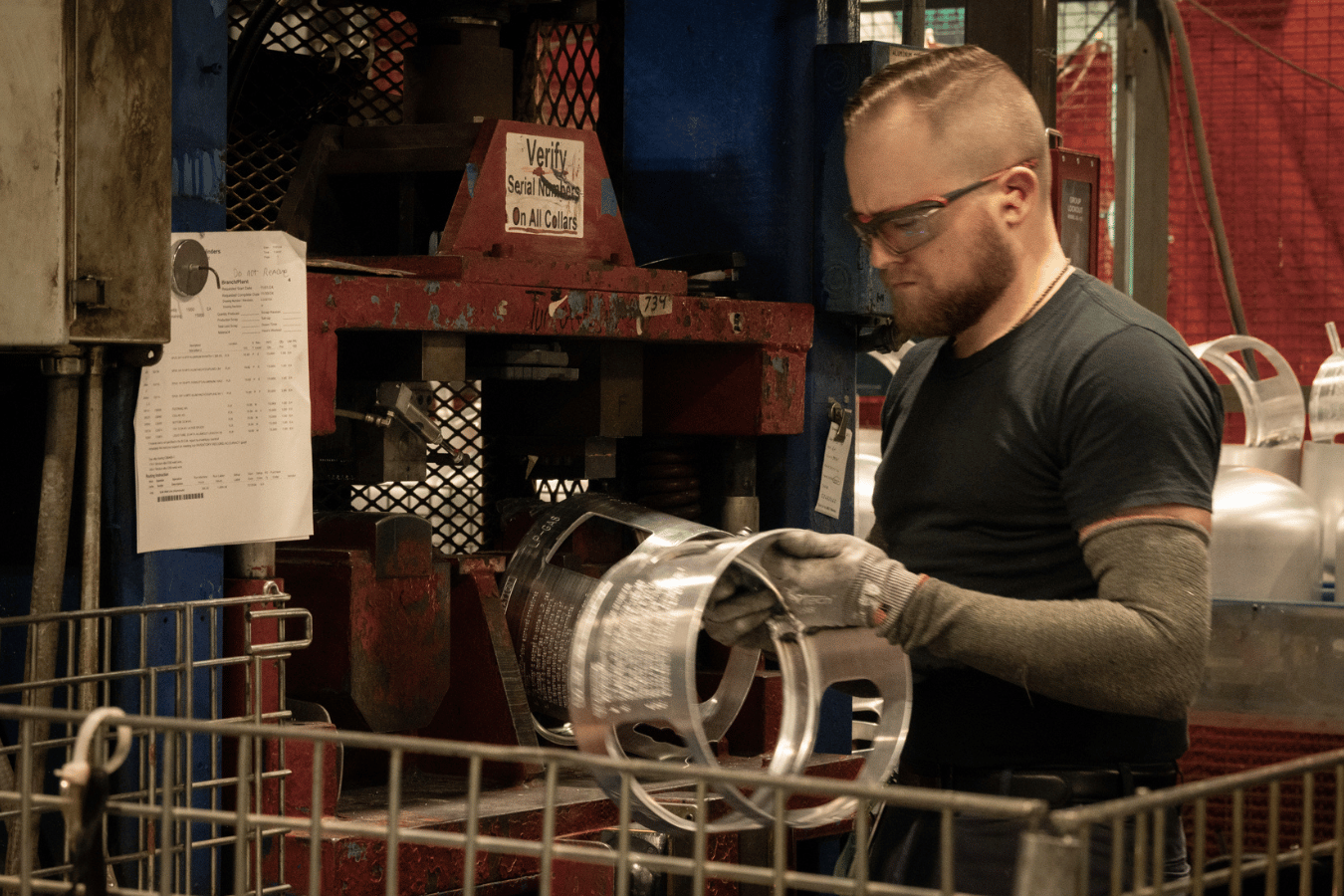
At our Westerville, Ohio, location, where 20, 30 and 40-lb steel and aluminum cylinders are manufactured, teams are finding new value in materials that might otherwise become waste. Excess powder paint can be upcycled into new powder coating or used as a binder in concrete production, while steel welding dust collected through filtration systems can be recycled back into steel or used in cement manufacturing. The facility also began using the steel and aluminum wastewater streams to help pre-neutralize one another, reducing the need to introduce additional chemicals before the water is discharged to the municipal wastewater system. Both facilities are also taking steps to extend the life of everyday materials.
By examining processes, finding value in materials previously treated as waste and continually looking for opportunities to reduce use, our teams are making environmental improvement part of how we operate — one process, one material and one facility at a time.
Our Westerville facility uses cooling tower systems help control operating temperatures for welding guns, presses, air compressors and the ovens. Coolant runs through multiple closed-loop systems to equipment, then outside to cooling towers where spray and drip processes use water to cool the liquid so it can be recirculated. Recently, a slight reduction in the flow of water through those cooling towers made an immense impact, estimated to conserve approximately one million gallons of water annually.